Active Speaker Crossover Design: What Impacts Clarity Most?
Clarity in active loudspeakers rarely comes from one premium component. In real systems, the audible result depends on how crossover frequency, filter topology, phase behavior, DSP control, and amplifier-driver integration work together.
That is why speaker crossover design active systems remain a practical evaluation topic across live sound, installed audio, studios, worship spaces, and performance venues. A box may measure well on paper, yet still lose speech detail or tonal coherence under load.
Across the broader PMAS landscape, where electroacoustics, DSP, venue acoustics, and supplier assessment intersect, crossover design becomes a useful lens. It reveals whether a system is engineered for consistent intelligibility, not just headline output.
Why crossover design shapes perceived clarity
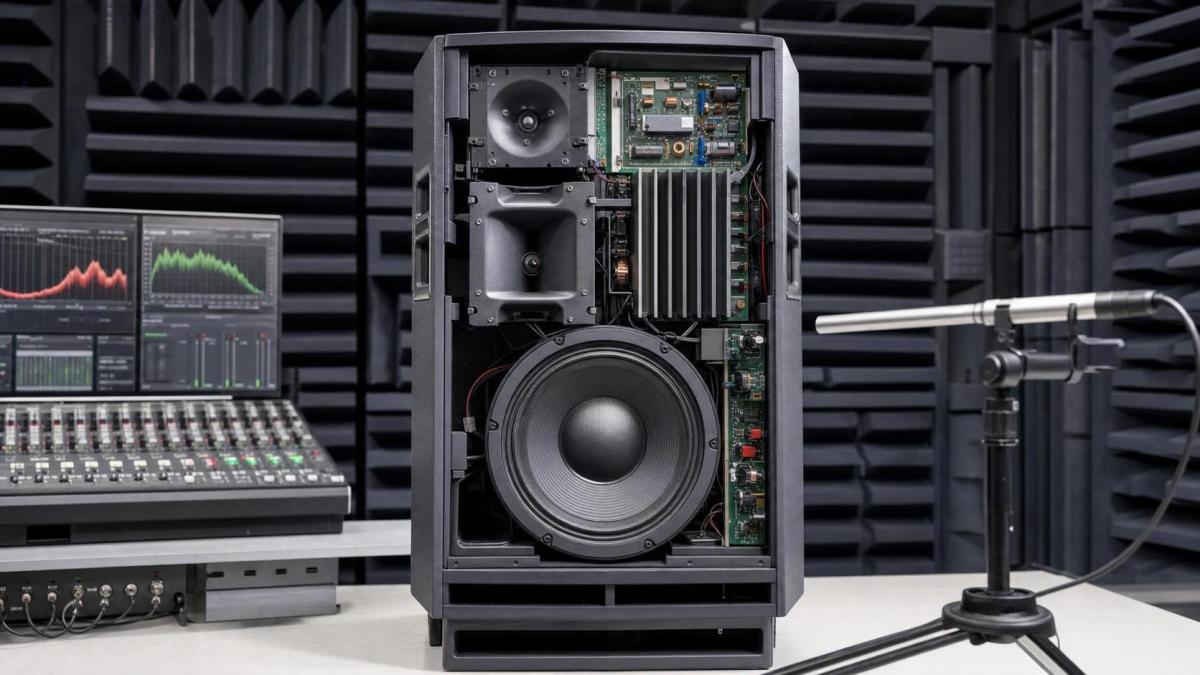
An active crossover divides the signal before amplification. Each driver receives a controlled band, supported by dedicated amplifier channels and DSP functions.
This architecture gives designers more control than passive networks. It also means that poor decisions become easier to hear.
If the crossover point is misplaced, the woofer may beam too high or the high-frequency driver may be pushed too low. Both cases can reduce vocal articulation.
If filters are too shallow, overlap grows. If they are too steep without proper alignment, transition regions may sound detached or unnatural.
So when asking what most affects clarity in speaker crossover design active platforms, the answer is usually interaction, not a single parameter.
The variables that matter most in practice
Some factors consistently have more impact than marketing language suggests. They are measurable, audible, and highly relevant during product comparison.
Crossover frequency and driver operating range
The chosen handoff point must respect both drivers. It should sit where directivity, excursion capability, distortion behavior, and thermal performance remain controlled.
A low crossover may improve directivity matching, yet it can also stress the compression driver. A high crossover may protect HF components, but increase upper-mid congestion.
Filter slope and acoustic summation
Electrical slope alone does not tell the whole story. What matters is the final acoustic slope after enclosure loading, horn behavior, and driver response are included.
In speaker crossover design active products, smooth summation through the crossover region often separates refined systems from merely powerful ones.
Phase alignment and time coherence
Misaligned phase shifts blur transients and weaken center image stability. This is especially obvious with speech, snare attack, piano articulation, and acoustic instruments.
DSP delay can correct physical offset, but only if the platform is tuned as a full acoustic system rather than as separate parts.
Amplifier control and protection behavior
Clarity changes under power. If limiter behavior is abrupt or amplifier headroom is too narrow, the crossover region can harden, flatten, or lose balance at show level.
A strong active platform keeps tonal consistency when SPL rises. That point matters more than a clean low-level demo.
Where clarity is won or lost
The most critical band is usually the upper midrange. It carries speech consonants, vocal presence, guitar edge, and much of the information listeners use to judge definition.
If the crossover region sits inside this band, design precision becomes even more important. Small response dips or phase errors can sound larger than they look.
That is why line array modules, point source boxes, stage monitors, and compact install speakers may require different crossover priorities, even when driver sizes appear similar.
Why the industry pays closer attention now
Active loudspeakers now combine Class-D amplification, onboard DSP, networking, remote control, and factory presets. That makes crossover behavior part of a larger system architecture.
For distributors, specifiers, and venue planners, this creates a more serious evaluation challenge. Two systems with similar frequency response charts may behave very differently in deployment.
PMAS often frames these questions through both technical and commercial logic. Better clarity can shorten tuning time, improve coverage confidence, reduce operator correction, and lower the risk of listener fatigue.
In fixed installations, that means more predictable speech results. In touring, it means fewer surprises when presets meet unfamiliar rooms.
How to assess speaker crossover design active systems
A useful review process goes beyond brochure claims. It should connect measurements, listening tests, and system behavior at different output levels.
- Check whether the crossover point aligns with realistic driver bandwidth, not just nominal specifications.
- Review off-axis response through the crossover region, because clarity loss often appears outside the main axis first.
- Listen for vocal consistency at low, medium, and high SPL rather than relying on one demo level.
- Study DSP documentation, including limiter strategy, delay structure, and available voicing presets.
- Compare acoustic summation with and without subwoofer integration where system handoff affects mid clarity.
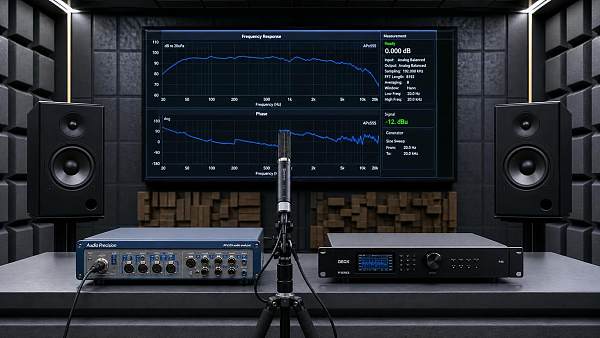
It is also useful to ask how the manufacturer validates presets. Good speaker crossover design active development usually includes chamber data, field verification, and protection tuning under thermal stress.
Typical misunderstandings during comparison
One common mistake is treating crossover slope as a quality score by itself. A steeper filter is not automatically clearer.
Another is focusing only on on-axis frequency response. A loudspeaker can look balanced forward while showing disruptive crossover lobing off-axis.
A third mistake is separating electronics from acoustics. In active products, amplifier damping, protection thresholds, and DSP voicing are part of the crossover outcome.
This is especially relevant in projects involving digital audio networking, scalable venue systems, or mixed inventories, where interoperability can hide acoustic compromises until late in deployment.
What to examine next
The most useful next step is to build a comparison matrix around clarity, not just power and price. Include crossover frequency, phase treatment, off-axis uniformity, limiter transparency, and preset logic.
For larger projects, relate those findings to venue acoustics, speech requirements, subwoofer strategy, and networked system control. That broader view often explains why one platform stays intelligible with less correction.
In the end, speaker crossover design active performance should be judged as system coherence under real operating conditions. When that perspective guides evaluation, clarity becomes easier to predict and easier to trust.
Related Intelligence
 Digital Live Mixing ConsolesAug 08, 2026How to Evaluate a Live Event Production Technology Supplier for System Reliability and ScalabilityLive event production technology supplier evaluation made practical: learn how to verify reliability, scalability, interoperability, and support before choosing a system for demanding events.
 Class-D Digital AmplifiersAug 08, 2026EU CE Rule Adds 96 kHz EMC Requirement for Audio AmplifiersEU CE Rule Adds 96 kHz EMC Requirement for Audio Amplifiers. Learn how EN 55032:2026/A2:2026 impacts CE marking, export compliance, testing timelines, and EU shipment readiness.
 CE/FCC & CITES Wood RegsAug 07, 2026What CE Marking for Percussion Instruments Covers and the Documents Importers NeedPercussion instruments CE requirements vary by design, electronics, toy status, and market use. Learn what CE marking covers and which importer documents you should verify before ordering.
 CE/FCC & CITES Wood RegsAug 07, 2026CITES Annex II Rule Tightens Dalbergia nigra ExportsCITES Annex II rule tightens Dalbergia nigra exports from Aug 7, 2026. Learn how permit checks, legal harvest proof, and customs compliance will impact wood parts trade.
 Digital Live Mixing ConsolesAug 06, 2026Live Sound Technology Trends Shaping Console and PA UpgradesLive sound technology trends reshaping console and PA upgrades: explore lower latency, smarter DSP, audio networking, and scalable systems that improve ROI, control, and uptime.
 Broadband Acoustic PanelsAug 06, 2026EU CE Rule Tightens for Acoustic ProductsEU CE rule tightens for acoustic products under EN ISO 16283-1:2026. Learn how new testing, certification, and CE marking changes may impact EU market access.
 Class-D Digital AmplifiersAug 05, 2026How to Verify CE Compliance for Class-D Amplifiers Before ImportClass-D amplifiers CE checks go beyond the logo. Learn how to verify DoC, EMC, safety reports, labels, and revisions before import to reduce EU customs and compliance risk.
 Carbon Fiber Acoustic GuitarsAug 05, 2026CITES Tightens Rules on Brazilian Rosewood DerivativesCITES tightens Brazilian rosewood derivative rules, raising compliance risks for Carbon Fiber Acoustic Guitars. Learn permit, traceability, and customs steps for EU, UK, and Japan trade.
 AoIP Network ProtocolsAug 04, 2026Dante AoIP Network Architecture: How to Design for Scalability and RedundancyDante AoIP network architecture explained: learn how to design scalable, redundant audio networks with better topology, QoS, clocking, and failover for reliable performance.
 Broadband Acoustic PanelsAug 04, 2026EU CE Rule Starts Acoustic Testing ShiftEU CE rule update: EN ISO 16283-1:2026 shifts acoustic testing for imported building acoustics products. Learn compliance risks, new lab report requirements, and how exporters can prepare now.
 Feedback Suppression DSPAug 03, 2026How Sound Calibration Technology Tools Improve DSP Tuning AccuracySound calibration technology tools improve DSP tuning accuracy by validating EQ, phase, timing, and level decisions with reliable data—helping audio pros achieve faster, smarter, and more consistent system performance.
 Carbon Fiber Acoustic GuitarsAug 03, 2026Brazilwood Annex II Listing Tightens Guitar Export RulesBrazilwood Annex II listing tightens guitar export rules for makers and suppliers. Learn how CITES permits, wood traceability, and importer reviews could impact shipments from Q3 2026.
 Digital Live Mixing ConsolesAug 02, 2026How to Choose a Live Digital Mixing Console for Channel Count, I/O, and Scene RecallLive digital mixing console buying guide: learn how to evaluate true channel count, local and stage I/O, patching, and scene recall to choose a reliable system with confidence.