EU CE Rule Starts Acoustic Testing Shift
On August 1, 2026, the EU begins mandatory enforcement of EN ISO 16283-1:2026 for imported building acoustics products including Broadband Acoustic Panels, Bass Traps & Diffusers, and Floating Soundproof Floors. The change matters because compliance is no longer centered on the previous standard path under EN ISO 140-4; instead, affected products must complete vibration-sound pressure coupling field testing and provide a third-party laboratory report. For exporters, manufacturers, certification teams, buyers, and project delivery partners, the practical issue is not only the new test name, but the tighter testing precision and stronger installation-condition simulation now tied to CE-related market access.
What the New Requirement Clearly Changes
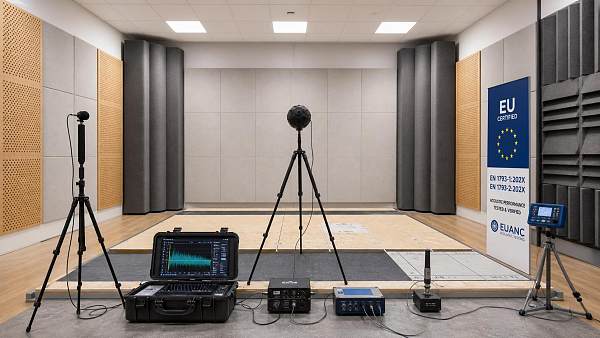
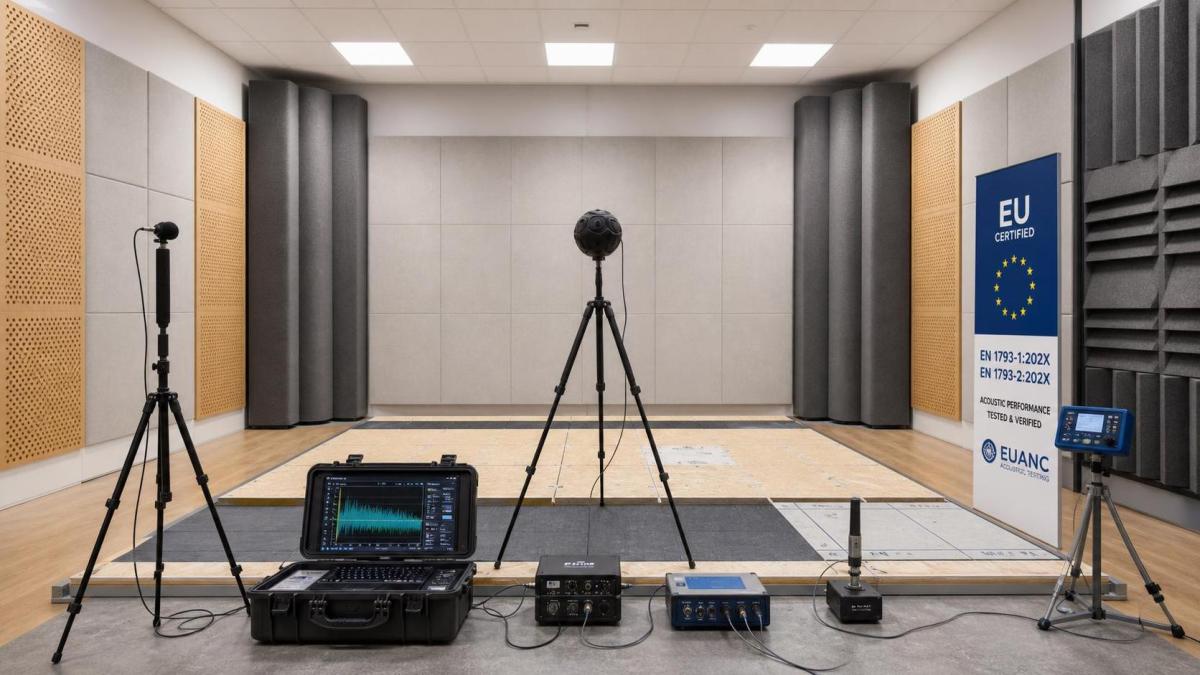
According to the provided information, EN ISO 16283-1:2026 becomes compulsory in the EU from August 1, 2026. The rule applies to imported architectural acoustic products such as Broadband Acoustic Panels, Bass Traps & Diffusers, and Floating Soundproof Floors. These products must undergo vibration-sound pressure coupling field testing and be supported by a third-party laboratory report.
The new requirement replaces the older EN ISO 140-4 framework referenced in the input. The update is described as raising both testing accuracy and the need to simulate installation conditions more closely. The information provided also indicates that this change directly affects the certification route and timing for Chinese suppliers exporting to the EU.
Where the Pressure Will Be Felt Across the Supply Chain
Export-facing manufacturers will face a different compliance timetable
From an industry perspective, manufacturers that ship acoustic treatment products into the EU are likely to feel the impact first. The reason is straightforward: the new rule links market entry to a field-testing method and third-party reporting requirement that may alter how certification is scheduled. The business impact is most likely to appear in product validation, export documentation, and delivery planning.
Trading companies will need to recheck product eligibility and paperwork flow
For direct trade businesses, the issue is less about production itself and more about whether each covered product line can still move through the export process without delay. What deserves closer attention is the completeness of test reports, the matching of documents to actual product categories, and whether customer commitments were built around the older compliance path.
Laboratory and certification coordination becomes more time-sensitive
Analysis shows that service providers involved in testing, report preparation, and certification support may become a key operational bottleneck. Because the new standard raises precision and installation-condition simulation requirements, affected companies will need to pay closer attention to testing arrangements, report readiness, and the sequencing between testing and shipment.
Buyers and project-side users may pay more attention to proof of compliance
Procurement teams and downstream users are also likely to be affected in practical terms. Where acoustic products are imported for project use, the focus may shift toward whether third-party reports are available early enough to support supplier selection, customs preparation, or project handover schedules. This is an operational observation rather than a confirmed outcome, but it follows directly from the stricter testing requirement described in the input.
What Companies Should Watch Now
Check which product lines fall within the stated scope
The first practical step is to review whether current exports include the categories explicitly mentioned in the provided information: Broadband Acoustic Panels, Bass Traps & Diffusers, and Floating Soundproof Floors. Companies should avoid assuming that a previous EN ISO 140-4-based path remains sufficient after August 1, 2026.
Prepare for longer coordination around testing and reporting
Analysis shows that the requirement for vibration-sound pressure coupling field testing plus a third-party laboratory report could affect certification timing. Businesses should therefore pay attention to internal scheduling around sample preparation, installation-condition simulation, report issuance, and shipment commitments.
Separate the policy signal from actual delivery readiness
Another point worth watching is the difference between knowing the rule has taken effect and being operationally ready to meet it. A standard can be mandatory on paper, while execution risk remains concentrated in test arrangements, document completeness, and customer communication. For firms already serving EU clients, this distinction may matter in contract discussions and lead-time planning.
Keep customer and supplier communication tightly aligned
For exporters and channel partners, the immediate concern is consistency between what is promised commercially and what can be supported by compliant testing documentation. Supplier qualification, report availability, and fulfillment timing deserve close review, especially where deliveries depend on a fixed certification sequence.
How to Read This Development at This Stage
Observably, this is more than a routine standards update because the provided information points to a stricter testing basis and a different compliance path for affected acoustic products. At the same time, it is more appropriate to understand this as a concrete regulatory change with ongoing operational consequences, rather than as a complete picture of market outcomes. The rule is already defined in effective-date terms, but its full business effect will depend on how companies, laboratories, and buyers adjust their workflows around the new testing requirement.
Analysis also suggests that the most relevant near-term question is not broad market direction, but execution: which companies can align product scope, testing, documentation, and delivery timing without friction. That makes this development both an immediate compliance issue and a longer-term signal that technical verification standards in this category are becoming more demanding.
A Short-Term Compliance Change With Longer-Term Meaning
In practical terms, the August 1, 2026 enforcement of EN ISO 16283-1:2026 should be read as an immediate change in compliance expectations for certain imported building acoustics products entering the EU. The confirmed facts already indicate tighter testing precision, stronger installation-condition simulation, and mandatory third-party reporting.
A neutral reading is that this is not merely something to watch from a distance. It already affects certification route planning and timing for exporters covered by the rule, especially Chinese suppliers referenced in the provided information. More broadly, it is better understood as a regulatory shift with direct operational implications and a need for continued monitoring as implementation details are checked in practice.
Basis of This Article and What Still Needs Verification
This article is based on the user-provided news title, event date, and event summary concerning the EU's enforcement of EN ISO 16283-1:2026 from August 1, 2026. It has been written from those confirmed inputs only and does not add unverified data, company cases, market figures, or external conclusions.
For this type of development, commonly relevant source categories may include official notices, company statements, industry association updates, authoritative media coverage, and standards organization documents. No specific official source link was provided in the input, so the exact official reference still needs ongoing verification. Continued attention should focus on later official wording, implementation interpretation, and any practical clarification related to testing scope, reporting expectations, and execution timing.
Related Intelligence
 AoIP Network ProtocolsAug 04, 2026Dante AoIP Network Architecture: How to Design for Scalability and RedundancyDante AoIP network architecture explained: learn how to design scalable, redundant audio networks with better topology, QoS, clocking, and failover for reliable performance.
 Broadband Acoustic PanelsAug 04, 2026EU CE Rule Starts Acoustic Testing ShiftEU CE rule update: EN ISO 16283-1:2026 shifts acoustic testing for imported building acoustics products. Learn compliance risks, new lab report requirements, and how exporters can prepare now.
 Feedback Suppression DSPAug 03, 2026How Sound Calibration Technology Tools Improve DSP Tuning AccuracySound calibration technology tools improve DSP tuning accuracy by validating EQ, phase, timing, and level decisions with reliable data—helping audio pros achieve faster, smarter, and more consistent system performance.
 Carbon Fiber Acoustic GuitarsAug 03, 2026Brazilwood Annex II Listing Tightens Guitar Export RulesBrazilwood Annex II listing tightens guitar export rules for makers and suppliers. Learn how CITES permits, wood traceability, and importer reviews could impact shipments from Q3 2026.
 Digital Live Mixing ConsolesAug 02, 2026How to Choose a Live Digital Mixing Console for Channel Count, I/O, and Scene RecallLive digital mixing console buying guide: learn how to evaluate true channel count, local and stage I/O, patching, and scene recall to choose a reliable system with confidence.
 Feedback Suppression DSPAug 02, 2026EU Updates EMC Rule for Audio Gear, Retesting RequiredEU updates EMC rule for audio gear: digital mixers, DSP units, and Class-D amplifiers may need retesting by Feb 1, 2027. See how the new EU EMC standard impacts compliance, inventory, and shipments.
 Active DSP Line ArraysAug 01, 2026Sound Reinforcement Coverage Optimization: How to Reduce Dead Zones in Wide VenuesSound Reinforcement Coverage Optimization: learn how to reduce dead zones in wide venues with smarter aiming, directivity control, delay alignment, and audience-focused design checks.
 Carbon Fiber Acoustic GuitarsAug 01, 2026CITES Annex II Update Tightens Guitar Export ComplianceCITES Annex II update tightens guitar export compliance as new controls on substitute wood affect permits, traceability, and shipments to the EU, Japan, and the U.S.
 Touring CAPEX & Acoustic ROIJul 31, 2026What Drives Audio Systems Engineering Cost in Large Venue Installations?Audio systems engineering cost in large venue installations is driven by acoustics, rigging, networking, labor, and commissioning. Learn what shapes budgets and compare proposals with confidence.
 AoIP Network ProtocolsJul 31, 2026EU Tightens CE Rules for AoIP Audio DevicesEU Tightens CE Rules for AoIP Audio Devices: learn how new AES67 interoperability and EMC reporting requirements may affect exports, certification, and market access before October 2026.
 Touring CAPEX & Acoustic ROIJul 30, 2026When Do Audio Workflow Services Improve Turnaround and Cost Control?Audio workflow services improve turnaround and cost control when volume, revisions, and approvals create hidden delays. Learn the clear signs, savings drivers, and best-fit use cases.
 CE/FCC & CITES Wood RegsJul 30, 2026Brazilwood Trade Now Needs FSC and CITES PapersBrazilwood trade now needs FSC and CITES papers from July 29, 2026. Learn how the new Annex II rule affects exports, customs timing, and instrument supply chains.
 Touring CAPEX & Acoustic ROIJul 29, 2026How to Compare Professional Sound Reinforcement Services for Venue Size, Coverage, and BudgetProfessional sound reinforcement services compared the smart way: learn how to evaluate venue size, coverage, integration, and budget for clearer sound and better long-term ROI.