FCC Makes AoIP Interoperability Mandatory
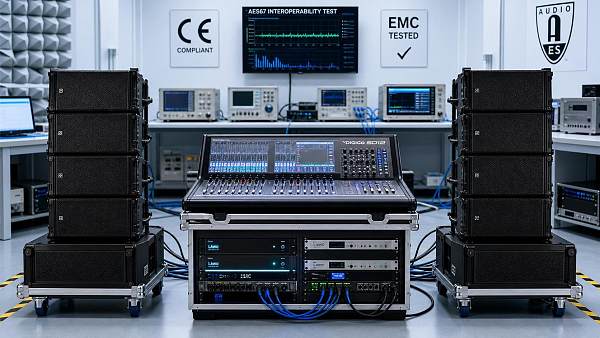
The FCC rule update taking effect on September 1, 2026 turns AoIP interoperability from a product feature discussion into a certification requirement for networked professional audio equipment. By making Dante and AES67 interoperability testing a mandatory part of FCC ID approval, the change is relevant not only to equipment manufacturers, but also to certification teams, testing service providers, buyers, distributors, and delivery planners working with Digital Live Mixing Consoles, Active DSP Line Arrays, Class-D Digital Amplifiers, and other terminals with network audio interfaces.
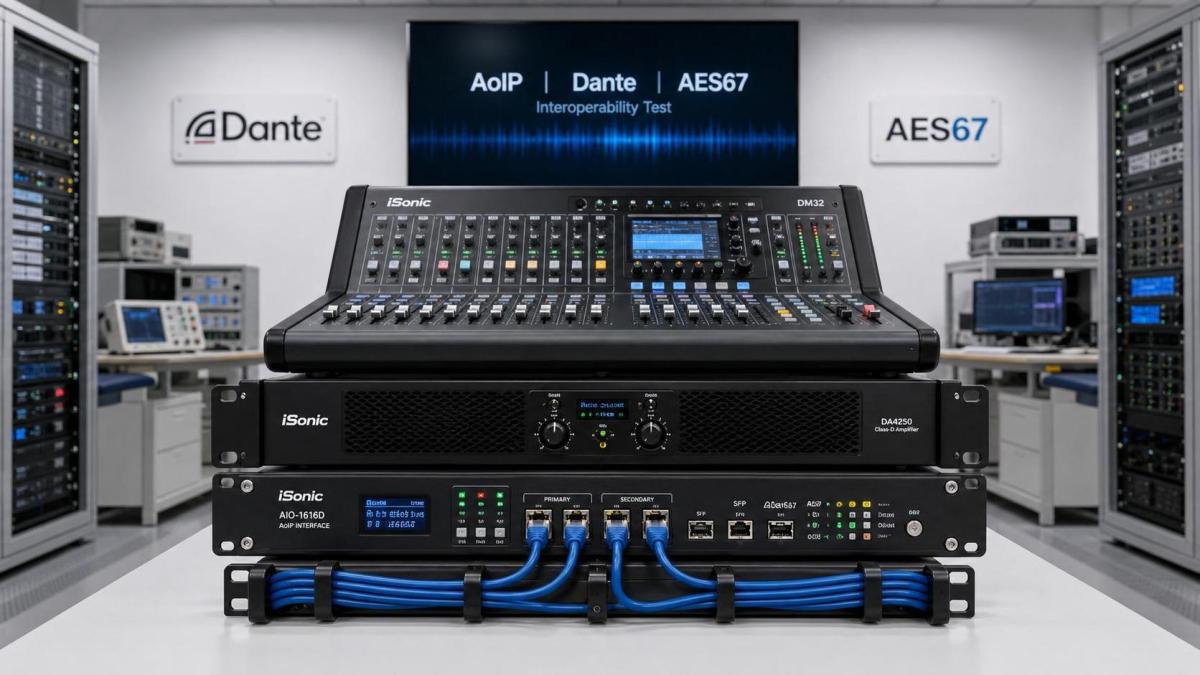
What the FCC Has Formally Changed
According to the provided event summary, the FCC formally revised KDB 447498 D001 on June 2, 2026. The revision adds interoperability testing for professional audio devices based on AoIP network protocols, specifically Dante and AES67, as a mandatory step in FCC ID certification.
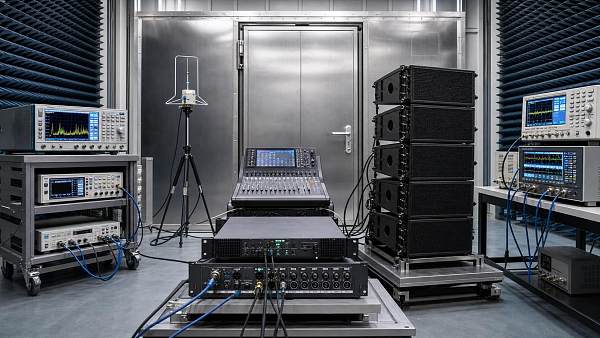
The rule applies to terminal equipment with network audio interfaces, including Digital Live Mixing Consoles, Active DSP Line Arrays, and Class-D Digital Amplifiers. The effective date provided for implementation is September 1, 2026.
Where the New Requirement Enters the Business Chain
Product approval work now faces a narrower compliance gate
From an industry perspective, manufacturers and export-oriented suppliers are likely to feel the impact first because the rule change is tied directly to FCC ID certification. The practical effect is that products with network audio interfaces may need interoperability evidence as part of the certification path, which can affect technical review, product readiness checks, and submission planning before market entry or shipment.
Testing and certification coordination becomes more important
Certification-related companies and testing service providers may see changes in workload structure rather than only in paperwork volume. Analysis shows that the key issue is not merely whether a device supports AoIP in product literature, but whether interoperability testing for Dante and AES67 is addressed in the certification process. This may influence how technical files, test arrangements, and supporting reports are prepared and reviewed.
Procurement and channel decisions may require earlier verification
For buyers, distributors, and channel partners, the rule change may affect model selection, supplier qualification review, and delivery scheduling. What deserves closer attention is whether the products being sourced fall within the scope of terminal equipment with network audio interfaces and whether certification-related documentation remains aligned with the new requirement after September 1, 2026.
Delivery and after-sales planning may need clearer document control
Supply chain service providers and after-sales teams may also be affected where shipment acceptance, project handover, or replacement planning depends on certification status. Observably, once interoperability testing becomes a mandatory certification link, document consistency across product specifications, test records, and compliance files becomes more relevant in delivery and traceability workflows.
What Companies Should Watch Before and After September 1
Review whether current product scope is affected
Companies handling professional audio equipment should first check whether their products include network audio interfaces and therefore may fall within the rule scope described in the provided summary. This is especially relevant for the named categories and for other terminal devices built around AoIP connectivity.
Recheck certification files and technical submissions
Analysis shows that compliance teams should pay close attention to whether existing FCC ID application materials, test plans, and technical descriptions adequately reflect interoperability testing tied to Dante and AES67. The input does not provide detailed execution criteria, so this should be treated as a review priority rather than an assumption that all documentation formats are already settled.
Align procurement and delivery schedules with certification timing
For sourcing teams and project delivery managers, a practical point is to monitor whether the new mandatory testing step could affect certification sequencing and therefore delivery planning. It is more appropriate to understand this as a timing and coordination issue that may need attention in purchase planning, supplier communication, and shipment commitments.
Continue tracking official wording and market implementation
Because the provided information confirms the rule revision and effective date but does not include detailed enforcement language, companies should continue watching for how the requirement is reflected in certification practice, tender documents, customer compliance requests, and related technical documentation expectations.
Why This Looks Like an Execution Signal
Analysis shows that this development is better understood as an implemented compliance change rather than a general policy discussion, because the provided summary identifies both a formal revision date and a stated effective date. At the same time, it should not yet be read as a fully detailed operating roadmap for every market participant, since the input does not include further execution guidance, test interpretation details, or downstream procurement responses.
From an industry perspective, the most important point is that interoperability in networked professional audio is being framed here as part of certification compliance, not only as a performance or integration preference. That shift may influence how companies organize product validation, supplier communication, and documentation control even before broader market feedback becomes visible.
How to Read the Current Change
The immediate significance of this update lies in its compliance effect: interoperability testing for Dante and AES67 is no longer described in the provided summary as optional or purely customer-driven for covered AoIP-enabled professional audio terminals. A measured reading is that the market now has a clearer certification signal, while many practical questions about enforcement rhythm, document expectations, and commercial response still require observation through implementation.
It is more appropriate to understand this event as a rule change that has already landed in principle, but whose operational impact across certification, procurement, export delivery, and project execution still needs continued monitoring.
Basis of This Article
This article is generated from the user-provided news title, event date, and event summary. The analysis is limited to the confirmed facts provided in that input and does not rely on additional unverified data, company statements, market figures, or external links.
For this type of development, commonly relevant source categories may include official regulatory notices, releases from supervisory authorities, industry association updates, standard-setting documents, trade administration information, testing and certification guidance, and reporting by established industry media. A specific official source link was not provided in the input, so the exact official reference still needs to be verified on an ongoing basis.
Further observation should focus on detailed implementation language, certification practice, testing interpretation, tender document changes, market feedback, and how affected companies adjust compliance and delivery processes after the September 1, 2026 effective date.
Related Intelligence
 Active DSP Line ArraysAug 01, 2026Sound Reinforcement Coverage Optimization: How to Reduce Dead Zones in Wide VenuesSound Reinforcement Coverage Optimization: learn how to reduce dead zones in wide venues with smarter aiming, directivity control, delay alignment, and audience-focused design checks.
 Carbon Fiber Acoustic GuitarsAug 01, 2026CITES Annex II Update Tightens Guitar Export ComplianceCITES Annex II update tightens guitar export compliance as new controls on substitute wood affect permits, traceability, and shipments to the EU, Japan, and the U.S.
 Touring CAPEX & Acoustic ROIJul 31, 2026What Drives Audio Systems Engineering Cost in Large Venue Installations?Audio systems engineering cost in large venue installations is driven by acoustics, rigging, networking, labor, and commissioning. Learn what shapes budgets and compare proposals with confidence.
 AoIP Network ProtocolsJul 31, 2026EU Tightens CE Rules for AoIP Audio DevicesEU Tightens CE Rules for AoIP Audio Devices: learn how new AES67 interoperability and EMC reporting requirements may affect exports, certification, and market access before October 2026.
 Touring CAPEX & Acoustic ROIJul 30, 2026When Do Audio Workflow Services Improve Turnaround and Cost Control?Audio workflow services improve turnaround and cost control when volume, revisions, and approvals create hidden delays. Learn the clear signs, savings drivers, and best-fit use cases.
 CE/FCC & CITES Wood RegsJul 30, 2026Brazilwood Trade Now Needs FSC and CITES PapersBrazilwood trade now needs FSC and CITES papers from July 29, 2026. Learn how the new Annex II rule affects exports, customs timing, and instrument supply chains.
 Touring CAPEX & Acoustic ROIJul 29, 2026How to Compare Professional Sound Reinforcement Services for Venue Size, Coverage, and BudgetProfessional sound reinforcement services compared the smart way: learn how to evaluate venue size, coverage, integration, and budget for clearer sound and better long-term ROI.
 Broadband Acoustic PanelsJul 29, 2026EU CE Rule Requires On-Site Sound Insulation VerificationEU CE Rule now requires on-site sound insulation verification for acoustic products under EN ISO 16283-1:2026. Learn how exporters and suppliers can adapt faster to protect EU project compliance.
 Feedback Suppression DSPJul 28, 2026Portable PA Systems for Church: How to Choose Clear, Feedback-Resistant SoundPortable PA Systems for church buying starts with clear speech, stable wireless use, and strong feedback resistance. Learn how to compare room fit, DSP, portability, and volunteer-friendly setup.
 Carbon Fiber Acoustic GuitarsJul 28, 2026CITES Annex II Listing Tightens Carbon-Fiber Guitar ExportsCITES Annex II listing tightens carbon-fiber guitar exports from China. Learn how new permit, legal-origin, and due diligence rules may affect EU, US, and Japan shipments.
 Bass Traps & DiffusersJul 27, 2026Recording Technology for Studios: What Actually Improves Sound Quality?Recording technology for studios explained clearly: discover what truly improves sound quality, from room acoustics and mic placement to monitoring, converters, and workflow.
 Feedback Suppression DSPJul 27, 2026EU Tightens CE EMC Tests for Audio DSP GearEU Tightens CE EMC Tests for Audio DSP Gear: learn how EN 55032:2026, stricter EMC rules, and AoIP chip checks will impact EU market access, compliance timing, and supply chains.
 CE/FCC & CITES Wood RegsJul 26, 2026How to Evaluate a Musical Instruments Supplier for Compliance and Long-Term RiskMusical instruments supplier evaluation starts with compliance, traceability, and export readiness. Learn how to reduce sourcing risk, protect quality, and build a stable long-term supply partnership.