Dante AVIO Rule Tightens AoIP Certification
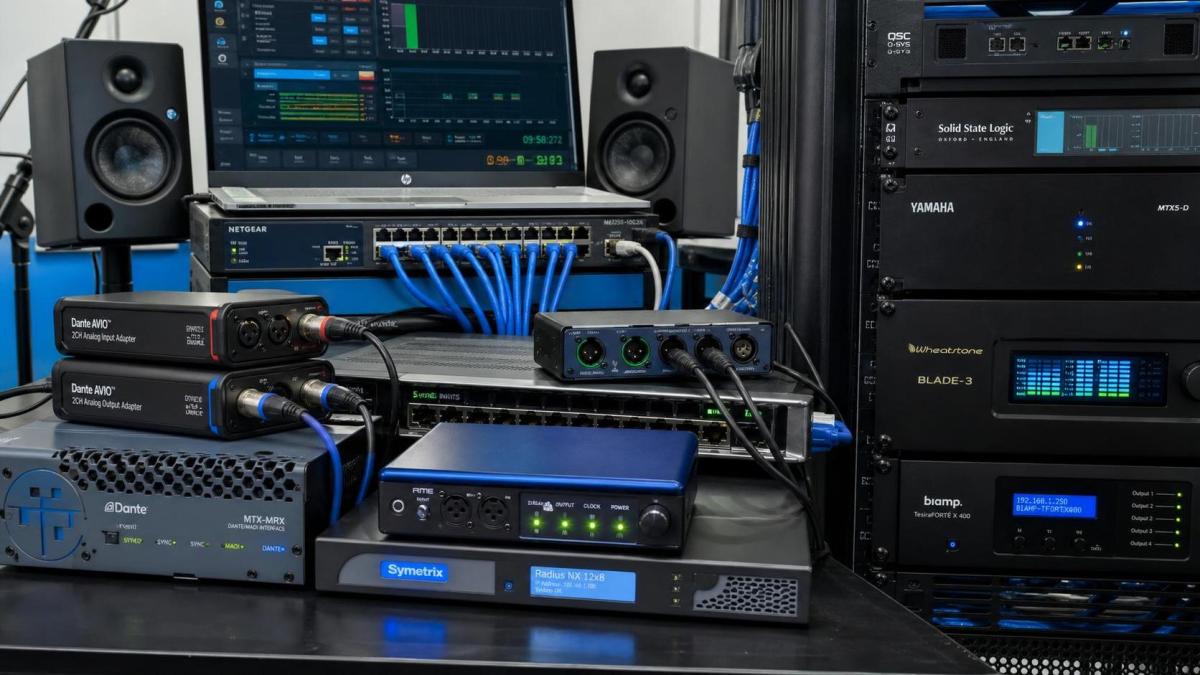
On June 30, 2026, Audinate released a firmware and certification policy update that changes the entry requirements for new Dante-certified AoIP Network Protocols interface devices. From October 1, 2026, new certification applications for products such as Dante-to-analog converters and AVIO adapters must natively support AES67 v4.1 and PTPv2.1 Boundary Clock mode, and must pass interoperability stress testing at an Audinate-designated laboratory. For manufacturers, buyers, certification-facing suppliers, and project delivery teams working on multi-vendor audio systems, this is worth close attention because it links product eligibility, test readiness, and delivery planning more directly to synchronization performance requirements.
What the update formally changes
The confirmed change is tied to Audinate's June 30, 2026 Dante AVIO Firmware & Certification Policy Update. According to the information provided, starting on October 1, 2026, all newly submitted AoIP Network Protocols interface devices seeking Dante certification must meet three stated conditions: native support for AES67 v4.1, native support for PTPv2.1 Boundary Clock mode, and successful completion of interoperability stress testing conducted by a laboratory designated by Audinate.
The scope described in the provided summary includes AoIP Network Protocols interface devices, specifically including Dante-to-analog converters and AVIO adapters. The stated purpose of the change is to address sub-millisecond synchronization drift in large multi-vendor venue systems.
Where the pressure will likely appear first
Product developers facing new certification gates
From an industry perspective, manufacturers of affected interface devices are the first group likely to feel the effect because the new rule is attached to new Dante certification applications. The practical impact is likely to show up in firmware readiness, protocol support validation, test preparation, and certification scheduling. What deserves closer attention is whether product specifications, technical files, and certification submissions clearly reflect native support for AES67 v4.1 and PTPv2.1 Boundary Clock mode, rather than relying on broad compatibility claims.
Procurement teams reviewing technical compliance
Buyers and project procurement teams may also be affected because certification status and protocol support can influence model selection, bid alignment, and acceptance criteria. Analysis shows that procurement documents, technical requirement sheets, and supplier qualification reviews may need closer scrutiny where AoIP interface devices are specified for multi-vendor systems. The main concern is not only whether a product is described as Dante-capable, but whether its certification pathway after October 1, 2026 aligns with the updated requirements.
Channel and delivery partners managing transition risk
Distributors, integrator-facing channel partners, and supply chain service providers may need to watch the transition period between policy announcement and mandatory certification enforcement. Observably, the business risk sits around order planning, inventory positioning, and delivery commitments for models that may be entering or re-entering certification workflows. The rule change could therefore affect product handover timing, documentation requests, and communications with end customers on compliance status.
Testing and after-sales functions watching interoperability claims
Certification-related service providers, technical support teams, and after-sales organizations may also need to adjust their review focus. Because the update explicitly references interoperability stress testing, product support discussions may increasingly turn on documented test results, protocol behavior under load, and system-level synchronization expectations in mixed-vendor deployments. For service teams, this may matter in troubleshooting, replacement planning, and quality traceability when deployed systems are sensitive to timing drift.
What companies should review now
Check certification scope against the October timeline
Analysis shows that companies with affected products in development or preparing new Dante certification applications should first review whether those applications fall after the October 1, 2026 threshold. This is a practical compliance screening step rather than a market forecast, and it matters because the rule is framed as a condition for new applications.
Reconcile technical documents with the stated protocol requirements
What deserves closer attention is whether internal technical documents, product datasheets, bid materials, and certification files use precise language on native support for AES67 v4.1 and PTPv2.1 Boundary Clock mode. Where the input does not provide detailed execution criteria, it would be premature to assume how broad or narrow the review standard will be, but document consistency is already a relevant preparation issue.
Prepare for laboratory-based interoperability testing
Companies should also pay attention to the testing requirement itself. The provided information confirms that interoperability stress testing must be completed through an Audinate-designated laboratory. Since no further procedural detail is included in the input, it is more appropriate to treat this as a compliance checkpoint that requires follow-up on laboratory scheduling, submission materials, and test-readiness evidence, rather than assuming a fixed lead time or outcome.
Watch contract and delivery language in ongoing projects
For suppliers, exporters, and project delivery teams, a practical issue is how ongoing quotations, tenders, and delivery commitments describe protocol support and certification status. Observably, contracts and technical schedules may need closer review where customers expect multi-vendor interoperability or where acceptance depends on certified configurations. In the absence of more detailed official execution guidance in the provided materials, companies should avoid overstating compliance conclusions and should track how customers and specifiers begin to reference the new requirement.
Why this reads as an execution signal
Analysis shows that this update is more than a general technical recommendation because it ties protocol support and interoperability testing directly to new certification access. At the same time, it is not yet possible, based on the provided information alone, to draw broader conclusions about market-wide implementation results, procurement exclusions, or delivery delays. It is more appropriate to understand this as a concrete execution signal with immediate compliance relevance for new certification planning, while still recognizing that the detailed market response will depend on how the requirement is applied in certification practice, technical specifications, and project documentation.
From an industry perspective, the most important follow-on observation is that the stated objective focuses on synchronization drift in large multi-vendor venue systems. That makes this change especially relevant wherever interoperability is not only a feature claim but a delivery condition. Even so, the input does not provide enough detail to conclude how all buyers, channels, or support teams will implement the change, so continued observation remains necessary.
How the market should read the update now
The industry significance of this development lies in its move from broad compatibility language toward clearer certification-linked technical requirements for certain AoIP interface devices. For affected companies, the immediate issue is less about headline impact and more about whether product readiness, documentation, testing preparation, and procurement language are aligned before the mandatory date.
At this stage, it is more appropriate to understand the update as a rule change with direct compliance consequences for new Dante certification applications, and as an early operational signal for procurement and delivery planning. Broader commercial effects still require observation through certification practice, tender wording, and market feedback.
Basis of this article and points still to verify
This article is based on the user-provided news title, event date, and event summary. For events of this type, relevant source categories typically include official company notices, regulator releases, trade authority information, industry association communications, standards organization documents, and reporting by established industry media. A specific official source link was not provided in the input, so the precise original publication link still needs to be verified on an ongoing basis.
Further observation is still needed on detailed certification interpretation, laboratory execution standards, changes in tender documents, market feedback from affected participants, and how companies implement the requirement in actual product, procurement, and delivery workflows.
Related Intelligence
 Class-D Digital AmplifiersAug 15, 2026How much power does professional audio equipment really need?Professional Audio Equipment needs enough clean power—not just more watts—to deliver clear sound, strong headroom, and reliable performance in real venues.
 Default CategoryAug 15, 2026CITES wood rule takes effect Aug. 1, requiring export approval numbers for maple and spruce music productsCITES wood rule takes effect Aug. 1—maple and spruce music products now need export approval numbers. Learn what exporters must verify to avoid customs delays and keep shipments moving.
 Digital Live Mixing ConsolesAug 14, 2026How audio engineering services affect live sound clarity and mix controlAudio engineering services shape live sound clarity and mix control, helping venues achieve intelligible, balanced, and repeatable results.
 CE/FCC & CITES Wood RegsAug 14, 2026CITES Wood Rules Take Effect Aug. 1: Maple Drums, Spruce Guitar Panels Need Approval CodesCITES wood rules take effect Aug. 1, 2026—learn which maple drum shells and spruce guitar panels need approval codes, plus key customs filing steps.
 Broadband Acoustic PanelsAug 13, 2026How sound coverage services improve speech clarity in large venuesSound coverage services improve speech clarity in large venues by optimizing speaker placement, delay, and tuning for clear, consistent announcements that keep every seat engaged.
 Class-D Digital AmplifiersAug 13, 2026EU Tightens CE Rules for Class-D AmpsEU tightens CE rules for Class-D amps, requiring EN 62368-1:2024 and EN 55032:2024 dual compliance. Learn what exporters, distributors, and buyers must check now.
 Active DSP Line ArraysAug 12, 2026How to Size Line Array PA Systems for Venue Coverage and SPL TargetsLine array PA Systems sizing guide: learn how to match venue coverage, SPL targets, headroom, subs, and rigging limits for clearer sound and smarter system decisions.
 Carbon Fiber Acoustic GuitarsAug 12, 2026CITES Adds All Pterocarpus Species to Annex IICITES adds all Pterocarpus species to Annex II, tightening permit control for rosewood guitars and global trade compliance. Learn what manufacturers and buyers must do now.
 Bass Traps & DiffusersAug 11, 2026Studio Bass Trap Design: How Placement and Thickness Affect Low-End ControlStudio bass trap design explained: learn how corner placement, rear-wall treatment, and trap thickness improve low-end accuracy, reduce bass buildup, and help your mixes translate better.
 Feedback Suppression DSPAug 11, 2026EN 18031-2 Takes Effect for Wireless Audio DSPEN 18031-2 takes effect for wireless audio DSP, making CE-RED, TLS 1.2+, and DoC readiness critical. Learn how it impacts exports, firmware, and EU market access.
 AoIP Network ProtocolsAug 10, 2026Audio over IP Integration: How to Balance Latency, Redundancy, and ScalabilityAudio over IP integration explained for real-world projects: learn how to balance latency, redundancy, and scalability to build reliable, future-ready professional audio networks.
 Broadband Acoustic PanelsAug 10, 2026EU CE Rule Takes Effect for Acoustic ProductsEU CE Rule Takes Effect for Acoustic Products: learn how EN 1793-5:2026, Class B-s1,d0 testing, and CE marking reshape EU imports, compliance, and delivery planning.
 Touring CAPEX & Acoustic ROIAug 09, 2026Concert Hall Acoustic Design Planning: How to Balance RT60, Clarity, and BudgetConcert hall acoustic design planning made practical: learn how to balance RT60, clarity, room use, and budget to compare solutions wisely and avoid costly acoustic mistakes.