Instrument Tone Optimization: What Improves Clarity Without Overprocessing
Instrument Tone Optimization matters because clarity rarely comes from adding more plugins, deeper menus, or aggressive correction. In most real setups, better tone starts earlier: with the instrument itself, the pickup or microphone position, stable gain structure, and a room that does not fight the source. When those factors are aligned, the result is usually more open, more intelligible, and easier to control across recording, rehearsal, worship, education, and live performance environments.
Where clarity really begins
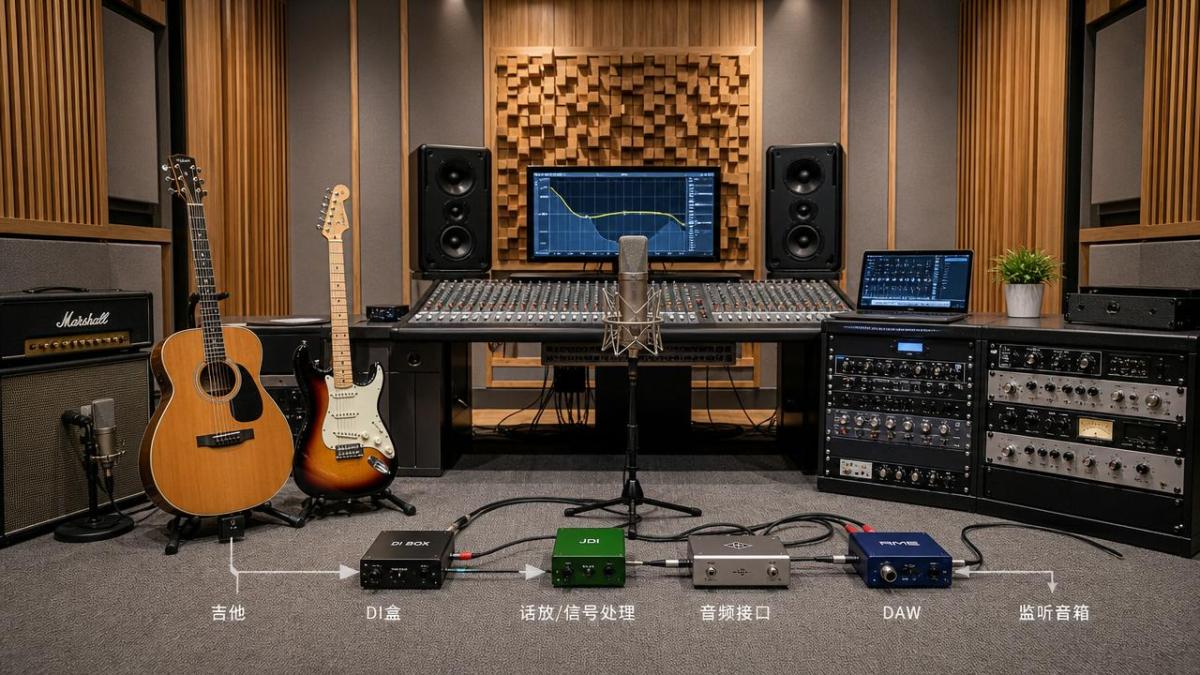
The first mistake in Instrument Tone Optimization is assuming the processor is the main solution. It is not. Processors refine tone, but they rarely fix weak source quality without side effects.
A clearer instrument sound usually comes from mechanical stability, clean signal transfer, and balanced acoustics. That applies to electric guitars, acoustic strings, brass, woodwinds, percussion, and hybrid electroacoustic systems.
In practical terms, clarity means note definition, stable dynamics, low unwanted resonance, and enough transient detail to remain understandable after amplification or recording.
This is why PMAS often frames sound quality as a chain rather than a single device decision. Material choice, pickup behavior, DSP restraint, and room interaction all shape the final impression.
Instrument Tone Optimization in current audio workflows
The topic receives more attention now because modern workflows make overprocessing easy. Digital consoles, amp modelers, channel strips, networked audio, and software correction offer huge flexibility, but they also invite excess.
When too many stages shape the same signal, clarity often decreases instead of improving. The sound may become louder, brighter, or more compressed, yet less natural and harder to place in a mix.
That matters across several sectors covered by PMAS. Recording rooms need translation between monitors and headphones. Performance venues need intelligibility over distance. AV rental systems need repeatability under time pressure.
In each case, Instrument Tone Optimization is valuable because it reduces corrective workload later. Less emergency EQ often means lower noise, fewer phase problems, and more predictable results between rehearsals and show time.
Why overprocessing happens
Overprocessing usually appears when the source is unclear, the monitoring is misleading, or the room exaggerates certain frequencies. The response is often reactive: more EQ, more compression, more exciters, more filtering.
A better response is diagnostic. Identify whether the issue comes from the instrument, the player interface, the electronics, the loudspeaker system, or the acoustic environment.
The source and signal path matter more than extra processing
Effective Instrument Tone Optimization begins with choices that improve the signal before it reaches DSP. These choices are often simple, but they have a larger impact than many operators expect.
- Fresh, appropriate strings, heads, reeds, or maintenance parts improve attack and consistency.
- Pickup height and balance affect output level, low-end thickness, and note separation.
- Clean connectors and stable impedance matching reduce dullness and intermittent noise.
- Correct gain staging preserves headroom and avoids forcing later correction.
- Microphone placement changes clarity faster than many equalizers can.
This is especially relevant in electroacoustic systems. A poor DI choice, a mismatched preamp, or a noisy power source can create a harsh or thin signal that no tasteful plugin can fully rescue.
For acoustic instruments with amplification, the source-to-transducer relationship deserves close attention. Contact pickups, internal microphones, magnetic pickups, and blended systems each shape clarity differently.
Gain structure as a clarity tool
Good gain structure is one of the least glamorous parts of Instrument Tone Optimization, yet it is often the most decisive. If the first stages are noisy or clipped, every later stage magnifies the problem.
Set input levels for healthy headroom, not maximum loudness. Then build level gradually through the chain. This keeps transients intact and leaves EQ and compression working in a controlled range.
EQ restraint usually sounds more expensive
One of the clearest signs of mature Instrument Tone Optimization is restrained EQ. Small cuts in the right place often outperform large boosts across several bands.
Boosting can create excitement during solo listening, but clarity is judged in context. A tone that seems bright alone may become brittle inside a dense mix or reflective room.
Subtractive moves are often more reliable. Removing boxiness, excessive low-mid buildup, or harsh upper presence can reveal detail without changing the instrument’s identity.
In digital mixing and DSP environments, this restraint is even more important. Multiple filters across input channels, buses, speakers, and playback systems can accumulate into a processed, phase-heavy result.
Compression, dynamics, and the cost of too much control
Compression can support Instrument Tone Optimization, but only when it protects musical shape instead of flattening it. Clarity does not come from removing every peak.
Overcompression reduces contrast between articulation and sustain. That can make an instrument feel smaller, less expressive, and harder to distinguish in ensemble settings.
A useful test is simple: bypass the compressor and compare not only loudness, but phrasing, note edges, and spatial impression. If the processed signal feels pinned to the front, it may be doing too much.
- Use slower attacks when transient definition is important.
- Avoid stacking several compressors without a clear reason.
- Match output gain carefully during comparison.
- Treat gates gently on acoustic or decaying sources.
Room interaction often explains the problem
Many tone complaints are actually room complaints. Reflections, standing waves, and placement errors can disguise themselves as weak instruments or poor electronics.
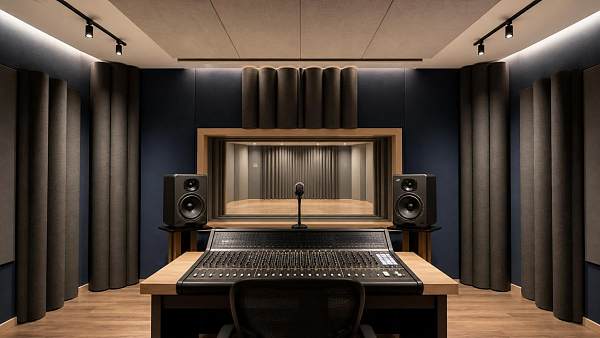
That is why Instrument Tone Optimization should include acoustic awareness. A reflective rehearsal room may exaggerate upper mids. A small stage may pile up low-frequency energy. A control room may hide phase issues.
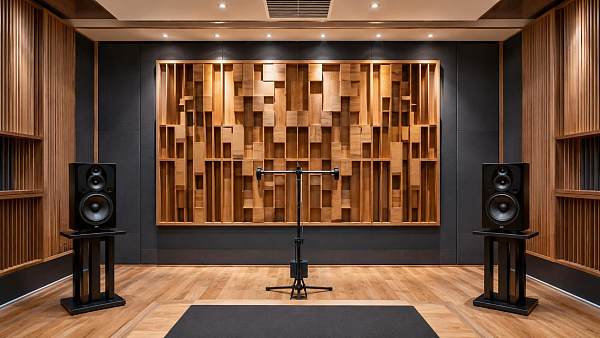
PMAS covers this broader view well because clarity is not only an instrument topic. Architectural acoustics, speaker deployment, diffusers, bass traps, and venue geometry all influence perceived tone.
Small adjustments with large results
Move the speaker or amplifier before rewriting the entire EQ curve. Reposition the microphone before adding another processor. Change monitoring angle before assuming the source lacks detail.
These actions are fast, reversible, and often more transparent than heavy correction.
Typical operating scenarios
Instrument Tone Optimization looks different depending on the application, but the underlying priorities stay consistent: preserve the source, reduce avoidable problems, and process only what improves translation.
In all of these settings, cleaner upstream decisions reduce the need for emergency problem-solving later.
A practical way to judge improvements
A useful Instrument Tone Optimization process is comparative, not emotional. Make one change at a time and judge it against specific criteria.
- Are single notes easier to identify?
- Does the tone stay clear at lower and higher levels?
- Is less EQ required in the next stage?
- Does the sound remain natural outside solo listening?
- Can the setup be repeated in the next session?
Those questions are often more revealing than asking whether the sound is simply bigger or brighter. Clarity is a functional quality, not just a flattering first impression.
What to review next
The next step is not necessarily buying more processing. It is reviewing the signal chain from source to room and identifying where clarity is lost first.
That review can include instrument setup, pickup matching, preamp headroom, console routing, loudspeaker placement, and acoustic treatment priorities. In many cases, the most effective upgrade is a more disciplined workflow.
For anyone comparing systems, venues, or suppliers, Instrument Tone Optimization becomes more useful when it is treated as a decision framework. Look for solutions that preserve tone before they reshape it, and measure success by consistency, intelligibility, and reduced corrective effort.
That approach leads to clearer sound, fewer surprises, and a better basis for evaluating instruments, electroacoustic tools, and room-dependent performance choices.
Related Intelligence
 AoIP Network ProtocolsSep 13, 2026When an AoIP network consultant is needed for a live venue upgradeAoIP network consultant: Learn when live venue upgrades need expert design for reliable audio, resilient networks, and smooth commissioning.
 Broadband Acoustic PanelsSep 12, 2026How architectural acoustic modeling predicts speech clarity in open officesArchitectural acoustic modeling helps open-office teams predict speech clarity, privacy risks, reflections, and masking performance before design decisions are fixed.
 Touring CAPEX & Acoustic ROISep 11, 2026How to compare PA systems suppliers for a touring sound projectPA Systems supplier comparison guide for touring projects: assess coverage, rigging, support, workflow, and costs to choose a reliable sound partner.
 Broadband Acoustic PanelsSep 10, 2026How multipurpose venue design prevents acoustic conflicts between eventsMultipurpose venue design prevents acoustic conflicts with smart zoning, sound isolation, variable acoustics, and coordinated AV systems for simultaneous events.
 Active DSP Line ArraysSep 09, 2026How sound system engineering for arenas prevents delayed coverageSound system engineering for arenas prevents delayed coverage through precise timing, controlled overlap, DSP alignment, and measured commissioning for clear, coherent audience audio.
 Carbon Fiber Acoustic GuitarsSep 08, 2026When should students choose a carbon fiber acoustic guitar?Student musical instruments buyers: discover when a carbon fiber acoustic guitar delivers durable, climate-resistant performance, comfort, and reliable practice for growing players.
 Phase Interference & ElectromagneticsSep 07, 2026How speaker crossover design reduces distortion in high-output systemsSpeaker crossover design low distortion: learn how precise filtering, phase alignment, driver protection, and DSP control deliver cleaner, more reliable high-output sound.
 Phase Interference & ElectromagneticsSep 07, 2026How does audio magnetic field design reduce hum and EMI?Audio magnetic field design reduces hum and EMI through smart transformer placement, orientation, grounding, shielding, and layout. Discover practical strategies for quieter, compliant audio systems.
 Feedback Suppression DSPSep 05, 2026How to prevent feedback when using handheld wireless microphonesHandheld wireless microphones: prevent feedback with proven speaker placement, gain staging, EQ, monitor control, and practical mic technique tips.
 Bass Traps & DiffusersSep 04, 2026How to evaluate diffuser design for studios by diffusion bandwidthDiffuser design for studios explained: evaluate diffusion bandwidth, geometry, wavelength, listening distance, measurements, and installation to choose a more accurate, balanced acoustic solution.
 Bass Traps & DiffusersSep 03, 2026How bass traps improve recording studio reverberation controlRecording studio reverberation control begins with effective bass trapping. Learn how measured, well-placed bass traps reduce modal decay, improve monitoring accuracy, and support reliable mixes.
 Active DSP Line ArraysSep 02, 2026How are safe working loads verified in Line Array Rigging?Line Array Rigging safe working load verification: learn how load paths, manufacturer limits, force calculations, inspections, and venue support checks protect every lift.
 Phase Interference & ElectromagneticsSep 01, 2026How frequency coordination keeps wireless microphone systems reliableWireless Microphone Systems stay reliable with smart frequency coordination. Learn to prevent interference, dropouts, and RF conflicts for flawless live events.