IALA Q2 2026 Report Shows Pickup Demand Jump
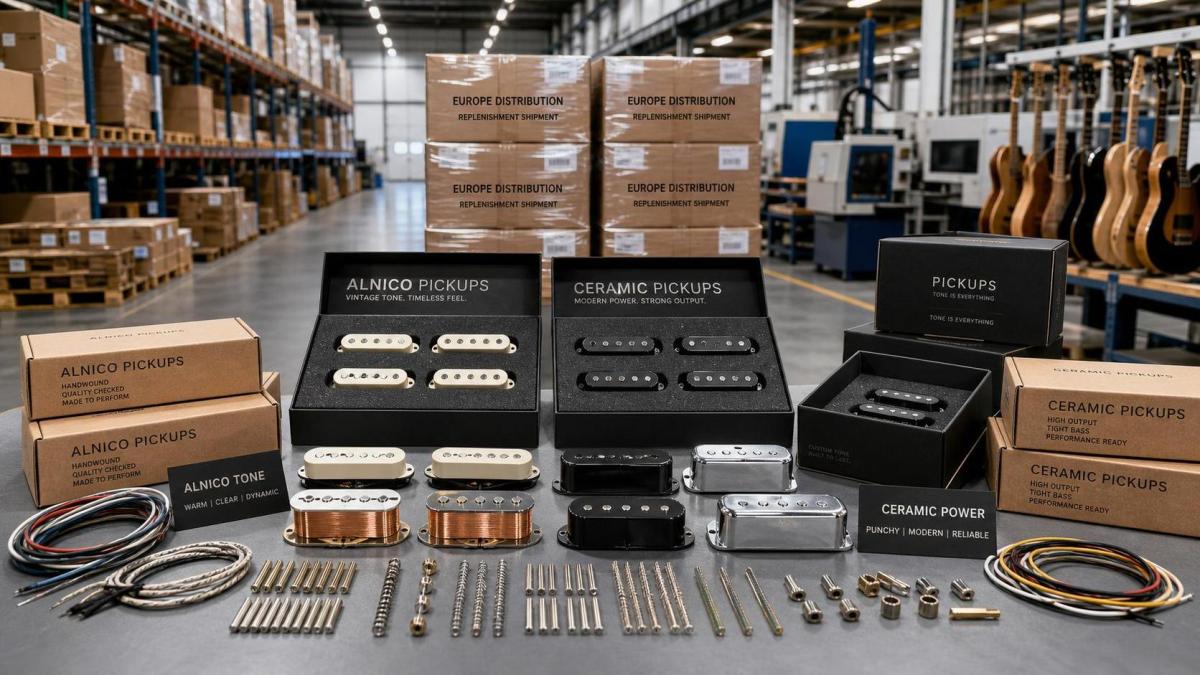
On July 10, 2026, the International Association of Luthier and Audio-related Activities (IALA) released its Global Instrument Procurement Outlook Q2 2026, pointing to a sharp rise in global procurement of Alnico/Ceramic Pickups and faster stock turnover among European distributors. For pickup suppliers, component manufacturers, distributors, and procurement teams in the musical instrument trade, the update is worth close attention because it links demand growth directly to retro tone preferences and the DIY modification trend while also highlighting a tighter operating rhythm in channel inventory.
What the Q2 2026 report specifically states
According to IALA, global procurement volume for Alnico/Ceramic Pickups increased by 37% year on year. The report attributes this change to the revival of retro tone preferences and the ongoing popularity of DIY modification. It also states that the average inventory turnover cycle among European distributors shortened to 42 days, compared with 61 days in the same period of 2025. In its recommendation to the market, the report advises suppliers to strengthen their ability to handle small-batch, flexible deliveries.
Where pressure and opportunity may emerge across the chain
For pickup and component suppliers, delivery flexibility becomes more visible
From an industry perspective, suppliers may be affected first because the report does not only indicate higher procurement volume; it also points to a market that may be moving in shorter and more fragmented order cycles. The main impact may appear in production planning, order allocation, and delivery scheduling. What deserves closer attention is whether existing supply arrangements can support smaller runs without slowing response times.
For distributors in Europe, inventory is moving faster
European channel distributors are directly implicated by the reduction in average inventory turnover days from 61 to 42. Analysis shows this matters less as an abstract efficiency figure and more as a sign that stocking decisions, replenishment timing, and assortment management may now need to move faster. Companies in this role should watch whether current forecasting and reorder practices still match the pace indicated by the report.
For procurement teams, demand signals may become less uniform
Procurement-side businesses may need to pay closer attention to how demand is being shaped by retro sound preferences and DIY modification activity. Observably, those drivers can influence not only volume but also mix, batch size, and delivery expectations. The main business effect may therefore show up in sourcing coordination, supplier communication, and order timing rather than in volume alone.
What companies should watch now
Focus on small-batch fulfillment capability
The report's recommendation on small-batch, flexible delivery is one of the most actionable points. Companies should pay attention to whether their current order handling, scheduling, and shipment arrangements are suited to more frequent and potentially smaller procurement requests.
Track Europe as an operational signal, not just a sales market
The shorter turnover cycle reported for European distributors should be watched as an operating indicator. Businesses serving that channel may need to review how quickly they can confirm orders, prepare shipments, and respond to replenishment requests if inventory continues moving at a faster pace.
Separate confirmed facts from broader market assumptions
Analysis shows the confirmed facts here are limited but meaningful: demand for Alnico/Ceramic Pickups rose, European inventory turned faster, and IALA recommended more flexible supply capability. Companies should avoid treating this alone as proof of a uniform shift across all pickup categories or all regions, and instead use it as a focused signal for planning and customer communication.
Keep customer communication aligned with delivery reality
Where order frequency rises and inventory cycles shorten, communication risk also increases. Suppliers and channel partners should pay attention to lead-time clarity, batch expectations, and fulfillment commitments so that commercial discussions stay aligned with actual delivery capacity.
Why this reads as a market signal worth monitoring
Observably, this update is more than a narrow product statistic because it combines a demand-side change with a channel-side efficiency change. Analysis shows that the 37% procurement increase and the shorter European turnover cycle together suggest a market moving with more urgency around this pickup segment. At the same time, it is more appropriate to understand this as a strong directional signal rather than a fully settled long-term pattern, since the available facts are limited to the report findings provided here.
How to read the development at this stage
At this stage, the report is best understood as a concrete but still developing indicator for the musical instrument supply chain. It points to stronger procurement activity in Alnico/Ceramic Pickups and a faster inventory rhythm in the European channel, while also signaling that supply flexibility may become a more practical competitive requirement. A neutral reading is that the development deserves operational attention now, but still requires continued observation before being treated as a fixed long-term market outcome.
Basis of this article and what still needs verification
This article is based on the user-provided news title, event date, and event summary concerning IALA's July 10, 2026 release of the Global Instrument Procurement Outlook Q2 2026. For this type of industry update, relevant source categories typically include official association releases, company announcements, industry association information, authoritative media reports, and standard-setting or trade-body documents. A specific official source link was not provided in the input, so the underlying document and any later clarifications still need ongoing verification. Continued attention should be placed on whether later official wording, follow-up releases, or market disclosures provide further detail on procurement patterns, regional channel behavior, or supplier delivery expectations.
Related Intelligence
 Hydraulic Formed BrasswindsAug 25, 2026When should a player move up to intermediate brass instruments?Intermediate brass instruments can boost tone, control, and confidence—but only at the right time. Learn the key signs a student is truly ready to upgrade.
 Bass Traps & DiffusersAug 24, 2026What actually works for percussion resonance control in small roomsPercussion resonance control in small rooms starts with room treatment, smart kit placement, and selective damping. Learn what truly works to get clearer, tighter drum sound.
 Active DSP Line ArraysAug 23, 2026What makes speaker system design for auditoriums intelligible in the back rowsSpeaker system design for auditoriums determines whether back-row listeners hear clear speech and balanced sound. Learn the key factors behind intelligibility, coverage, aiming, DSP, and room acoustics.
 Class-D Digital AmplifiersAug 22, 2026What drives guitar amplifiers price from practice amps to stage rigsGuitar amplifiers price explained: discover what really affects cost from practice amps to stage rigs, and choose the right amp for your tone, budget, and performance needs.
 AoIP Network ProtocolsAug 21, 2026How to evaluate low latency audio transmission systems for live soundLow latency audio transmission systems for live sound: learn how to compare latency, clocking, redundancy, and network compatibility to choose a reliable, show-ready solution.
 Digital Live Mixing ConsolesAug 20, 2026What drives wireless microphones price differences in live event setupsWireless microphones price varies with RF stability, channel density, battery systems, durability, compliance, and support. Learn how to compare live event setups and avoid costly failures.
 Broadband Acoustic PanelsAug 19, 2026When room acoustics modeling is accurate enough to choose panel placementRoom acoustics modeling becomes decision-ready when inputs, sensitivity checks, and measurements align. Learn when panel placement guidance is truly reliable.
 Broadband Acoustic PanelsAug 18, 2026How much difference do studio acoustic treatment systems make in small roomsStudio acoustic treatment systems can dramatically improve clarity, bass control, and stereo imaging in small rooms. Learn what really works and why better treatment leads to more reliable mixes.
 Neodymium High-frequency HornsAug 17, 2026How neodymium driver magnet structure affects horn clarityLearn how neodymium driver magnet structure shapes horn clarity through flux control, gap design, symmetry, and heat handling—key factors for cleaner speech, sharper transients, and smarter driver selection.
 Active DSP Line ArraysAug 16, 2026How line array coverage engineering affects SPL consistencyLine Array Coverage Engineering shapes SPL consistency, helping live sound stay even, intelligible, and powerful across every audience zone.
 CE/FCC & CITES Wood RegsAug 16, 2026Philippine Manila light and sound expo opens Aug. 13: CE/FCC compliance becomes a hard procurement thresholdManila’s Aug. 13 light and sound expo puts CE/FCC compliance first—learn how exporters and buyers can avoid customs holds and on-site rejection.
 Class-D Digital AmplifiersAug 15, 2026How much power does professional audio equipment really need?Professional Audio Equipment needs enough clean power—not just more watts—to deliver clear sound, strong headroom, and reliable performance in real venues.
 Default CategoryAug 15, 2026CITES wood rule takes effect Aug. 1, requiring export approval numbers for maple and spruce music productsCITES wood rule takes effect Aug. 1—maple and spruce music products now need export approval numbers. Learn what exporters must verify to avoid customs delays and keep shipments moving.