Audio Measurement and Modeling for Room Tuning
Audio Measurement and Modeling has become a practical foundation for room tuning because it replaces guesswork with evidence. In venues where speech intelligibility, musical balance, and system consistency all matter, a measured view of the room is often the difference between a system that merely works and one that performs reliably. When measurements are paired with acoustic modeling, engineers can see how the room will behave, not just how it sounds at one listening position.
That is why Audio Measurement and Modeling is drawing attention across live sound, architectural acoustics, recording, worship spaces, theaters, and multi-use venues. PMAS, as a B2B intelligence portal focused on professional audio and acoustic systems, treats this topic as part of a larger workflow that connects room behavior, loudspeaker design, DSP tuning, and venue planning. The value is not only technical clarity, but also better decision-making before time and budget are spent on repeated adjustments.
Why room tuning now depends on data
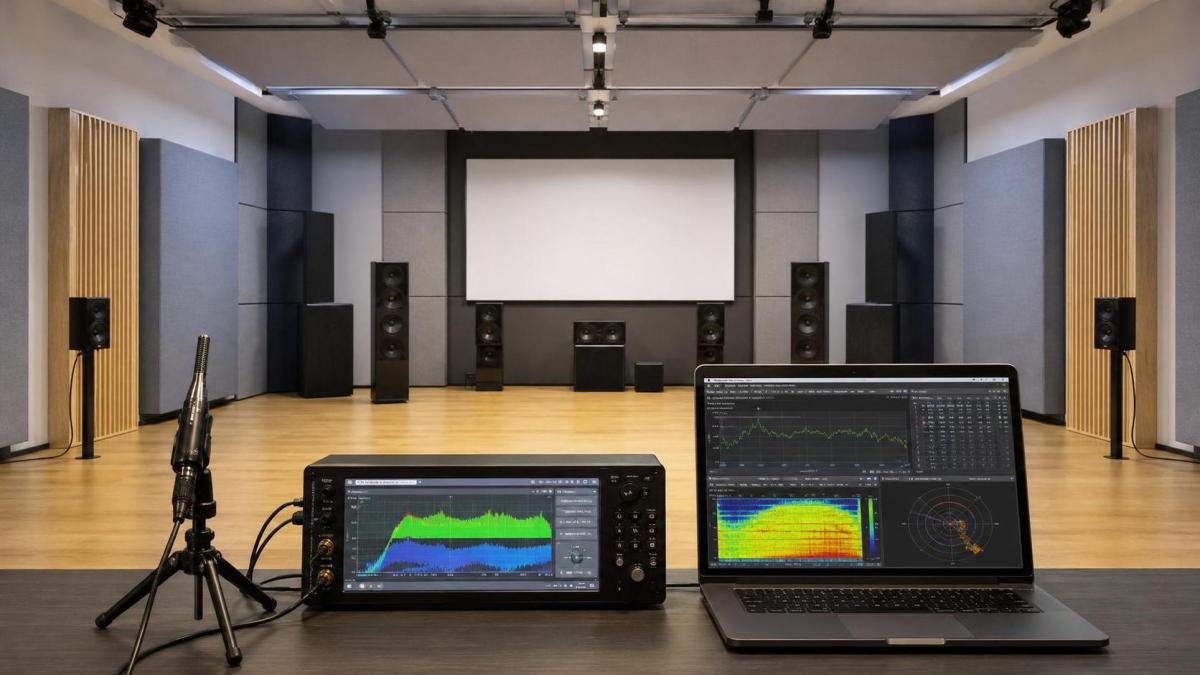
Room tuning used to rely heavily on experience, listening tests, and incremental correction. Those skills still matter, but modern venues are more complex. Line arrays, distributed speakers, digital mixing consoles, DSP processors, and networking-based signal paths have made the acoustic chain more capable, yet also more sensitive to setup choices.
Audio Measurement and Modeling helps reveal what the ear alone may miss. Early reflections, low-frequency buildup, comb filtering, and uneven decay can all make a system sound inconsistent from seat to seat. A controlled measurement process shows where those issues come from, while modeling helps predict how room geometry, treatment, and source placement will affect the result.
For technical evaluators, that combination is especially useful because it supports repeatable comparisons. Two rooms may look similar on paper, but their behavior under program material can differ sharply once surfaces, volume, occupancy, and speaker coverage are considered.
What Audio Measurement and Modeling actually covers
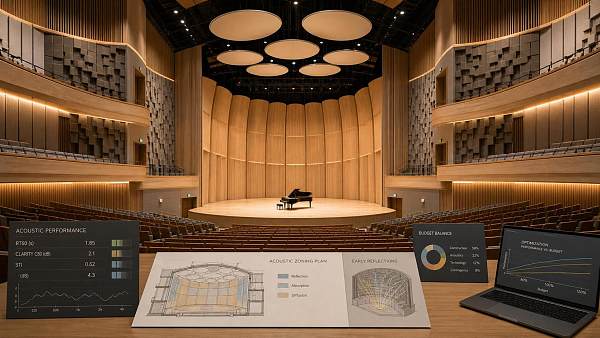
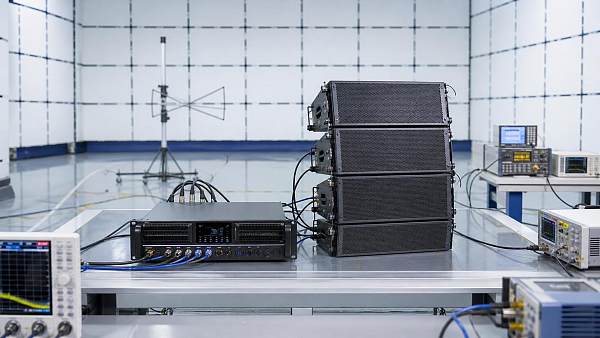
At a practical level, Audio Measurement and Modeling is the process of capturing acoustic data and using it to understand or simulate system behavior. Measurements may include frequency response, impulse response, decay time, phase alignment, STI-related indicators, and low-frequency modal behavior. Modeling may include room-acoustic prediction, loudspeaker coverage simulation, and treatment planning.
The point is not to produce a perfect digital copy of the venue. The point is to identify the variables that matter most. A room with strong side-wall reflections may need different treatment from one with a pronounced bass problem. A speech venue may prioritize intelligibility and even coverage, while a music room may tolerate a different balance between direct sound and reverberant energy.
In PMAS coverage, this aligns closely with acoustic panels, bass traps, diffusers, Helmholtz resonators, DSP tuning, and EASE-style acoustic modeling. These are not isolated tools. They work best when measurement data tells the team where to intervene and what outcome to verify.
Typical data points worth watching
- Frequency irregularities that affect tonal balance.
- Reflection timing that reduces clarity.
- Room modes that exaggerate or hide bass content.
- Coverage gaps that create inconsistent listening zones.
Where the business value appears first
The clearest value of Audio Measurement and Modeling is reduced trial-and-error. A venue team can spend hours adjusting EQ and placement by ear, only to discover that the real problem is geometry or boundary interaction. Measurement shortens that path. Modeling then helps prioritize what should be fixed acoustically, electronically, or through layout changes.
This matters in commercial environments because every adjustment has a cost. In concert spaces, a tuning session may need to fit into a narrow production window. In worship venues or theaters, changes must work across spoken word, live music, and playback. In studios and education spaces, repeatability is often more important than dramatic sound shaping.
PMAS often frames these decisions as part of a broader operational picture. A system that is easier to tune, easier to verify, and easier to document is also easier to support, upgrade, and explain to stakeholders.
How to read the results without overreacting
A common mistake is treating one measurement trace as the final answer. Audio Measurement and Modeling works best when results are interpreted in context. A narrow dip in response may be less important than a long decay problem. A strong peak at one point may not matter if coverage across the room is stable. The room must be evaluated as a system, not as a single graph.
Another useful habit is separating fixable causes. Some issues are electronic, such as crossover timing, polarity, or EQ decisions. Others are structural, such as hard parallel surfaces or poor speaker placement. A third group belongs to the treatment layer, where absorption and diffusion can reshape the sound field. Good modeling helps sort these out before action begins.
That is also where experienced evaluators add value. The strongest reading is not always the most obvious one. What matters is whether the data supports a sensible correction path.
A practical workflow for room tuning
In practice, Audio Measurement and Modeling usually becomes more effective when it follows a simple workflow. Start with the room geometry and intended use. Then identify the primary listening positions, sound source locations, and any fixed boundaries that influence reflections. After that, measure the room in a controlled state, and compare the results against the predicted behavior.
Once the main issues are clear, adjust in layers. Placement and aiming come first, because they often produce the largest improvement with the least cost. DSP correction comes next, but only after the physical layout is reasonable. Acoustic treatment is then used to manage the room’s time-domain behavior and reduce residual problems that electronics cannot solve alone.
This approach is especially relevant for hybrid venues that host speech, performance, and playback in the same space. The tuning target should match the actual program use, not an abstract ideal.
Useful decision points
- Define the main use case before choosing the tuning target.
- Verify placement before relying on EQ.
- Use modeling to compare options, not to replace verification.
- Check multiple positions, not just the reference seat.
What to watch next
As venues become more integrated, Audio Measurement and Modeling will sit closer to system design, commissioning, and long-term maintenance. That makes it useful not only during initial setup, but also when a site is renovated, repurposed, or expanded. The same data can support supplier comparison, treatment planning, and performance documentation.
For PMAS readers, the next step is usually to connect the acoustic picture with the broader technical chain. Loudspeaker choice, amplifier headroom, DSP workflow, networking reliability, and room treatment all influence the final result. A good room tune is rarely a single adjustment. It is a sequence of informed decisions.
If the goal is cleaner sound, more predictable coverage, and fewer revision cycles, the most reliable path is to compare measured behavior with modeled expectations, then tune against that shared reference. That is where Audio Measurement and Modeling becomes a practical tool, not just a technical concept.
Related Intelligence
 AoIP Network ProtocolsAug 10, 2026Audio over IP Integration: How to Balance Latency, Redundancy, and ScalabilityAudio over IP integration explained for real-world projects: learn how to balance latency, redundancy, and scalability to build reliable, future-ready professional audio networks.
 Broadband Acoustic PanelsAug 10, 2026EU CE Rule Takes Effect for Acoustic ProductsEU CE Rule Takes Effect for Acoustic Products: learn how EN 1793-5:2026, Class B-s1,d0 testing, and CE marking reshape EU imports, compliance, and delivery planning.
 Touring CAPEX & Acoustic ROIAug 09, 2026Concert Hall Acoustic Design Planning: How to Balance RT60, Clarity, and BudgetConcert hall acoustic design planning made practical: learn how to balance RT60, clarity, room use, and budget to compare solutions wisely and avoid costly acoustic mistakes.
 CE/FCC & CITES Wood RegsAug 09, 2026CITES Annex II Permit Rule Expands for Brazilian RosewoodCITES Annex II permit rule expands for Brazilian rosewood, reshaping export compliance, sourcing, and customs checks. Learn what Dalbergia nigra traders must review now.
 Digital Live Mixing ConsolesAug 08, 2026How to Evaluate a Live Event Production Technology Supplier for System Reliability and ScalabilityLive event production technology supplier evaluation made practical: learn how to verify reliability, scalability, interoperability, and support before choosing a system for demanding events.
 Class-D Digital AmplifiersAug 08, 2026EU CE Rule Adds 96 kHz EMC Requirement for Audio AmplifiersEU CE Rule Adds 96 kHz EMC Requirement for Audio Amplifiers. Learn how EN 55032:2026/A2:2026 impacts CE marking, export compliance, testing timelines, and EU shipment readiness.
 CE/FCC & CITES Wood RegsAug 07, 2026What CE Marking for Percussion Instruments Covers and the Documents Importers NeedPercussion instruments CE requirements vary by design, electronics, toy status, and market use. Learn what CE marking covers and which importer documents you should verify before ordering.
 CE/FCC & CITES Wood RegsAug 07, 2026CITES Annex II Rule Tightens Dalbergia nigra ExportsCITES Annex II rule tightens Dalbergia nigra exports from Aug 7, 2026. Learn how permit checks, legal harvest proof, and customs compliance will impact wood parts trade.
 Digital Live Mixing ConsolesAug 06, 2026Live Sound Technology Trends Shaping Console and PA UpgradesLive sound technology trends reshaping console and PA upgrades: explore lower latency, smarter DSP, audio networking, and scalable systems that improve ROI, control, and uptime.
 Broadband Acoustic PanelsAug 06, 2026EU CE Rule Tightens for Acoustic ProductsEU CE rule tightens for acoustic products under EN ISO 16283-1:2026. Learn how new testing, certification, and CE marking changes may impact EU market access.
 Class-D Digital AmplifiersAug 05, 2026How to Verify CE Compliance for Class-D Amplifiers Before ImportClass-D amplifiers CE checks go beyond the logo. Learn how to verify DoC, EMC, safety reports, labels, and revisions before import to reduce EU customs and compliance risk.
 Carbon Fiber Acoustic GuitarsAug 05, 2026CITES Tightens Rules on Brazilian Rosewood DerivativesCITES tightens Brazilian rosewood derivative rules, raising compliance risks for Carbon Fiber Acoustic Guitars. Learn permit, traceability, and customs steps for EU, UK, and Japan trade.
 AoIP Network ProtocolsAug 04, 2026Dante AoIP Network Architecture: How to Design for Scalability and RedundancyDante AoIP network architecture explained: learn how to design scalable, redundant audio networks with better topology, QoS, clocking, and failover for reliable performance.